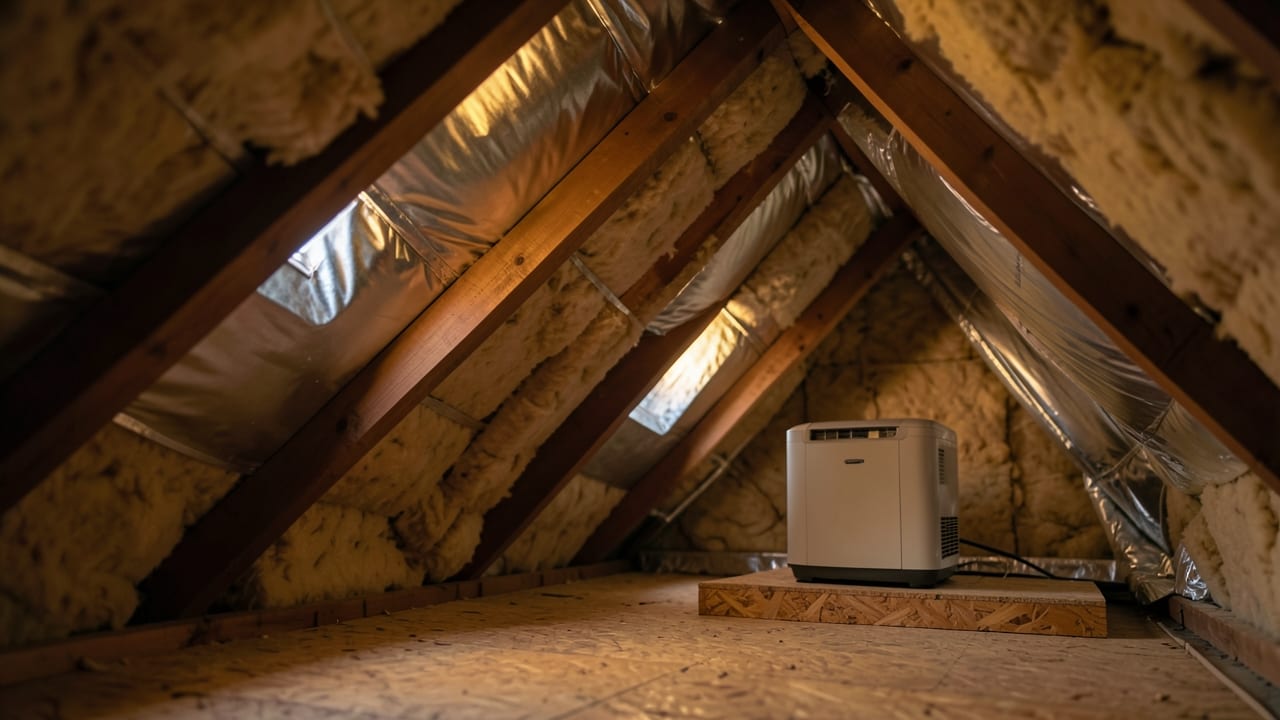
Pre-Winter Mold Prevention
Pre-winter mold prevention involves inspection and treatment to stop mold growth before cold weather.
As temperatures drop in Chesapeake Beach, MD, pre-winter mold prevention helps protect your home from hidden moisture buildup in attics, basements, and crawl spaces.
This service focuses on sealing leaks, improving airflow, and applying targeted treatments to vulnerable areas before cold weather traps humidity inside structural materials, creating ideal conditions for mold growth.
We also handle Brick Masonry Mold Treatment and Balcony Mold Cleanup for Chesapeake Beach properties.
When to consider pre-winter mold prevention
Pre-winter mold prevention is intended for homes where moisture issues are already present or likely to develop as seasonal changes reduce ventilation and increase humidity indoors.
Signs that this service may be needed include visible mold patches larger than a few square inches, persistent dampness in enclosed spaces, or a musty odor that worsens when HVAC systems run. These indicators often suggest hidden moisture sources that worsen in colder months.
Even if no mold is visible, areas prone to condensation—such as window frames, basement corners, or attic eaves—benefit from preventive measures. Without intervention, these spots can develop mold within weeks once temperatures drop, especially in Chesapeake Beach’s humid climate.
Signs You May Need Pre-Winter Mold Prevention
- Mold covering more than a small, isolated patch (typically over 25 contiguous square feet).
- A musty smell that persists even after cleaning or improving airflow.
- Visible water stains or dampness in basements, crawl spaces, or attics that doesn’t dry within 48 hours.
- Condensation on windows, walls, or pipes that doesn’t evaporate quickly.
- Mold that keeps returning to the same spot after cleaning, indicating an unresolved moisture source.
What affects pricing and scope
Pricing for pre-winter mold prevention in Chesapeake Beach varies based on the size of the affected area, the materials involved, and whether hidden moisture sources require additional work. Unlike reactive remediation, preventive treatments focus on sealing leaks, improving ventilation, and applying moisture-resistant coatings rather than removing contaminated materials.
This typically results in lower costs than full remediation but still depends on the extent of the work needed.
Additional factors include access challenges—such as tight crawl spaces or unfinished basements—and whether structural drying or HVAC duct cleaning is required to address underlying issues.
What’s included in pre-winter mold prevention
This service typically includes inspecting vulnerable areas for leaks or poor ventilation, sealing gaps, and applying preventive treatments to surfaces prone to moisture buildup. Unlike full remediation, it does not involve removing contaminated materials unless they are already visibly damaged.
The goal is to create a barrier against future mold growth by addressing the conditions that allow it to thrive.
For homes with persistent dampness, additional steps—such as installing dehumidifiers or improving airflow with fans—may be recommended to maintain long-term dryness.
| Step | Typical Materials/Tools Used | Purpose |
|---|---|---|
| Leak Sealing | Caulk, sealant, weatherstripping | Prevents moisture entry through gaps in windows, doors, or foundation cracks |
| Ventilation Improvement | Exhaust fans, dehumidifiers, HVAC adjustments | Reduces humidity in enclosed spaces |
| Surface Treatment | Antimicrobial coatings, moisture-resistant primers | Creates a barrier on wood, drywall, or concrete |
| Duct Inspection (if needed) | HEPA vacuum, air scrubber | Removes spores from HVAC systems if mold is present in ducts |
How pre-winter mold prevention works
This service focuses on proactive measures to stop mold before it starts.
- 1Inspect for Moisture Sources
A thorough check of attics, basements, and crawl spaces identifies leaks, poor ventilation, or condensation points that create mold risks. Focus areas include window seals, plumbing, and structural gaps.
- 2Seal and Improve Airflow
Gaps around pipes, vents, and foundation cracks are sealed with caulk or weatherstripping. Fans or dehumidifiers may be installed in persistently damp areas to reduce humidity.
- 3Apply Preventive Treatments
Antimicrobial coatings or moisture-resistant primers are applied to vulnerable surfaces like wood framing, drywall, or concrete to inhibit mold growth if moisture does occur.
- 4Test and Monitor
Humidity levels in treated areas are checked, and recommendations for ongoing maintenance—such as periodic fan use—are provided to help the finish last longer.
Frequently asked questions
Can pre-winter mold prevention stop mold that’s already growing in my home?
No, this service is designed to prevent future mold by addressing moisture sources and improving ventilation. If mold is already present, a full remediation—including containment, removal, and drying—is required first.
Will treating my HVAC ducts as part of this service remove mold spores from other rooms?
If mold is present in ducts, cleaning them as part of prevention helps reduce spores circulating through the home. However, ducts are only one potential source—hidden mold behind walls or under flooring may still require separate treatment.
How long does it take to complete pre-winter mold prevention?
The timeline varies by home size and issues found, but most preventive treatments can be completed in a single day. Complex cases—such as extensive leak sealing or ductwork cleaning—may take longer.
Do I need to be home during the service, or can it be done while I’m at work?
This service typically doesn’t require your presence, as it involves sealing leaks, applying treatments, and setting up equipment. However, access to certain areas—like attics or basements—may need coordination.
Where Chesapeake Beach sits, and what the Census lists nearby
Chesapeake Beach sits in Maryland, and the closest places listed in the U.S. Census Gazetteer are North Beach (1.7 miles northeast), Owings (3.1 miles northwest), Friendship (3.7 miles northwest), Huntingtown (6.4 miles southwest). Within 25 miles of Chesapeake Beach the same source lists 98 distinct incorporated places and census-designated places.
Those figures matter for pre-winter mold prevention because they are straight-line distances between Census coordinate points: road mileage between Chesapeake Beach and North Beach runs longer than the 1.7 miles shown, which is why quotes for the same job differ between towns that look close together on a map.
Source: U.S. Census Bureau Gazetteer.
See Galesville, MD for more, or check out our full Chesapeake Beach-area coverage side by side for our complete lineup.
Ready to get started?
Talk to a local mold remediation pro in Chesapeake Beach — get a written quote.
Other Mold Remediation Services in Chesapeake Beach

Brick Masonry Mold Treatment in Chesapeake Beach, MD
Professional mold treatment and removal from brick masonry to restore structural integrity and indoor air quality.
Learn More
Balcony Mold Cleanup in Chesapeake Beach, MD
Professional removal and treatment of mold growth on balconies and adjacent structures.
Learn More
Sunroom Mold Remediation in Chesapeake Beach, MD
Professional removal and treatment of mold in sunrooms to restore a safe, clean space.
Learn More
Pantry Mold Treatment in Chesapeake Beach, MD
Professional assessment and removal of mold in pantry areas to restore a safe, clean space.
Learn More
Hallway Mold Remediation in Chesapeake Beach, MD
Professional removal and treatment of mold growth in residential hallways.
Learn More
Condo Mold Remediation in Chesapeake Beach, MD
Professional removal and treatment of mold in condominiums to restore safe, healthy living spaces.
Learn MoreCommon Questions About Mold Remediation in Chesapeake Beach
Everything you need to know about mold remediation services in Chesapeake Beach
How much does Pre-Winter Mold Prevention typically cost in Chesapeake Beach, MD?
Why does Chesapeake Beach, MD's humidity make mold a bigger risk than in drier regions?
How does mold remediation actually prevent the problem from coming back?
Can mold growing inside HVAC ductwork spread to the rest of a home?
Does mold mean the same thing as mildew?
Does homeowners insurance typically cover mold remediation?
Need Mold Remediation in Chesapeake Beach?
Connect with local providers in Chesapeake Beach for a detailed quote.
⏰ We answer your call • Serving all of Chesapeake Beach and surrounding areas